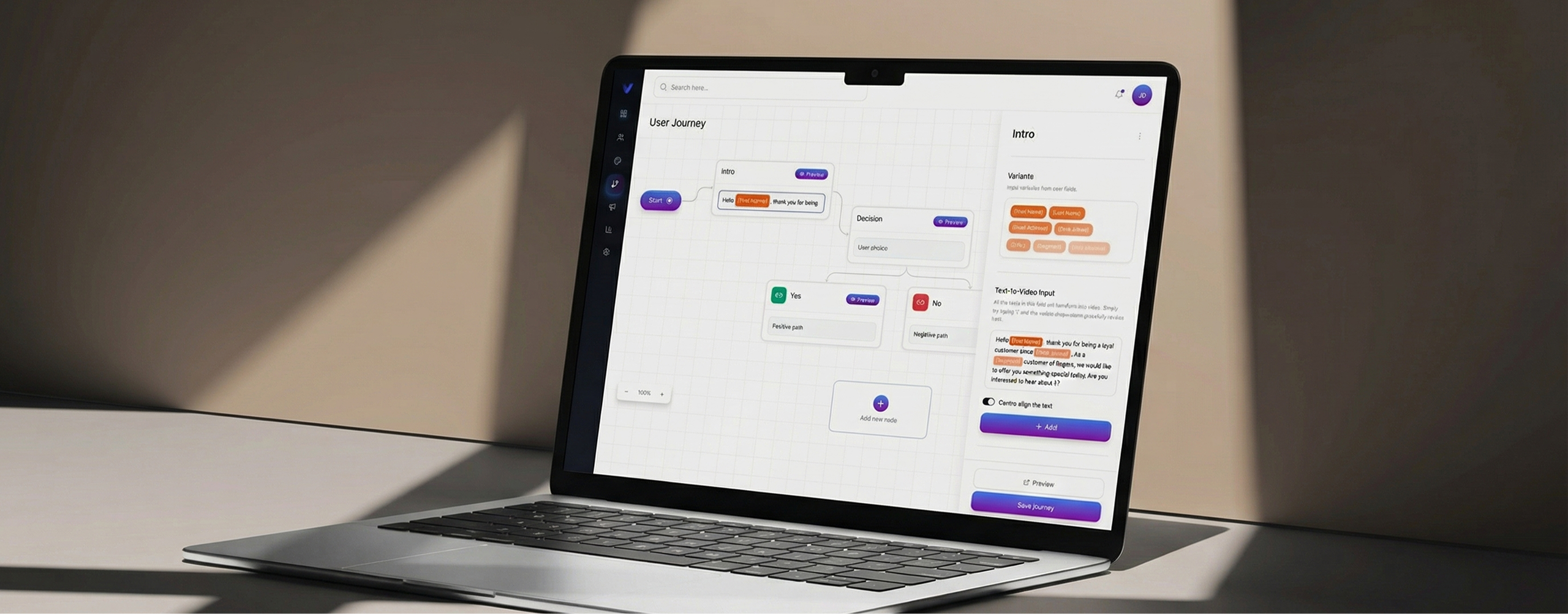
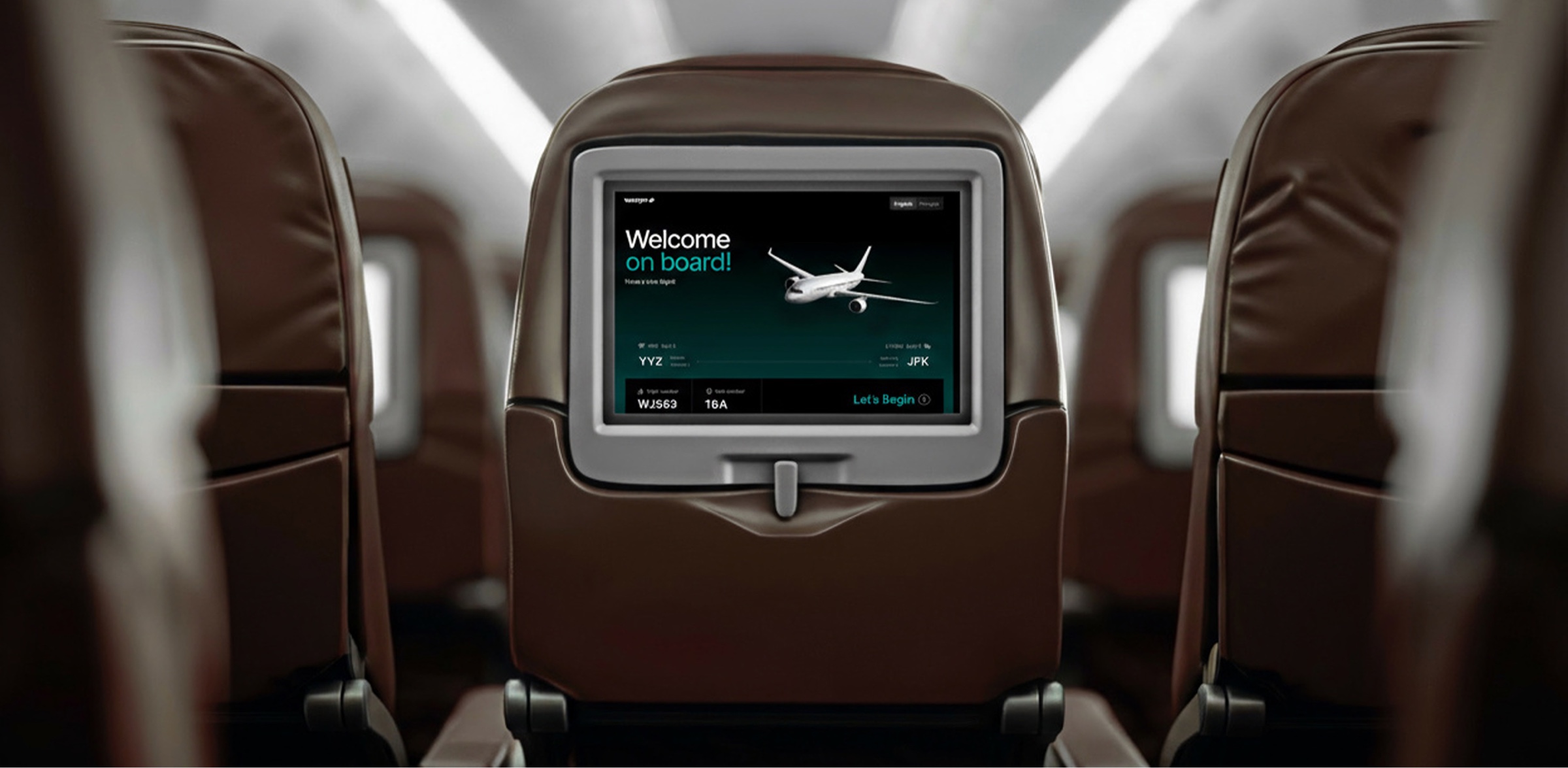
Platforms designed: seat-back screen, crew panel, mobile BYOD, and desktop.
InovativAI / 2025
The future of in-flight entertainment.
An IFE system built with the power of AI.
00 / Overview
Designing a more human layer for the cabin.
I was the Design Lead at InovativAI, where I led the design of Nexora, an AI assistant within the ArMax in-flight entertainment system.
Nexora brings real-time speech-to-text translation and offline AI assistance together to create a more human in-flight experience.
What’s ArMax and Nexora?
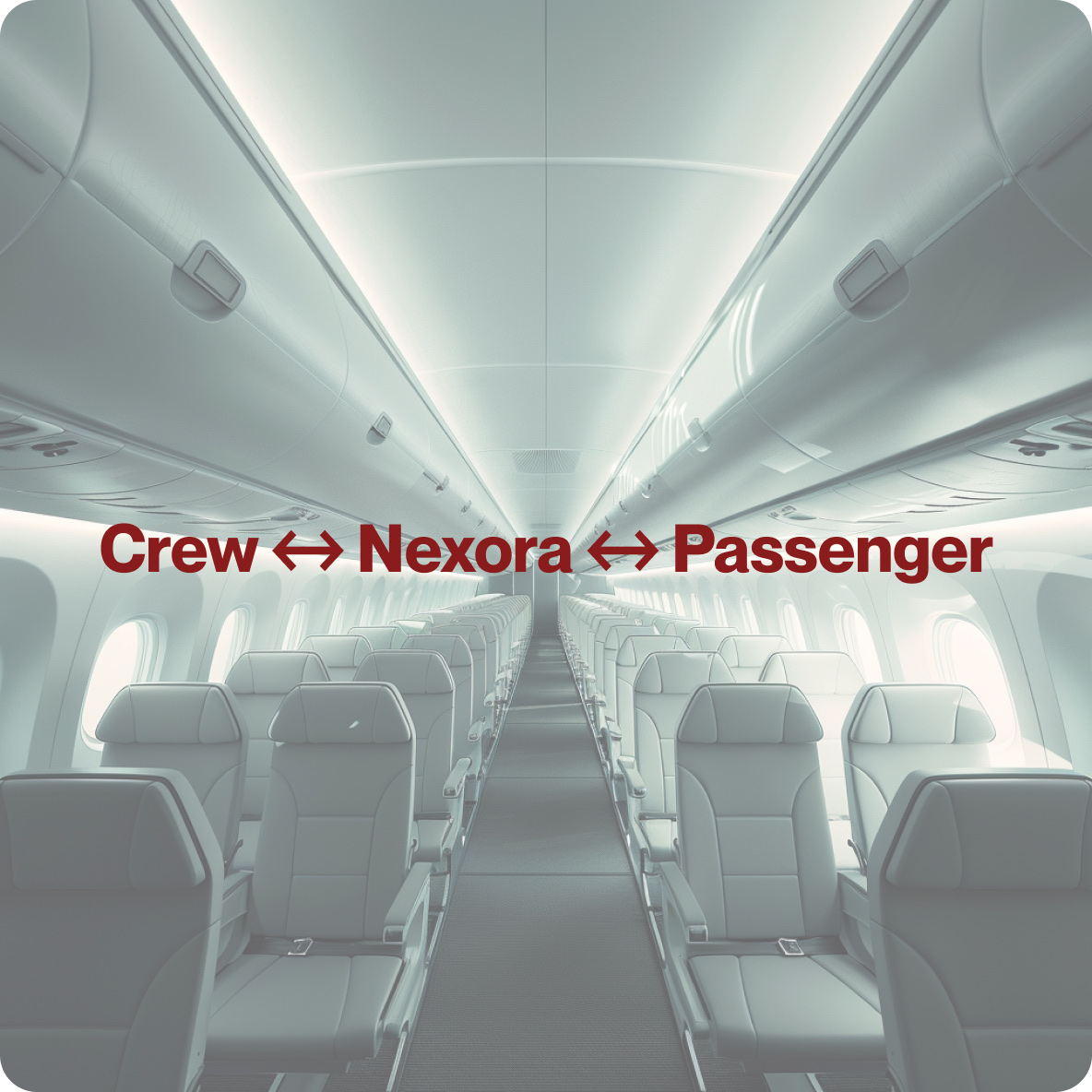
Crew ↔ Nexora ↔ Passenger
ArMax is InovativAI’s next-generation in-flight platform connecting passengers, crew, and AI through a single system. At its core, Nexora transforms traditional entertainment into intelligent interaction—blending translation, accessibility, and personalized assistance on board.
Built as part of ArMax’s next-generation in-flight system, Nexora explores how AI can improve communication, accessibility, and comfort on long journeys.
Interface components built within the shared design system.
Months of research, prototyping, and simulation testing.
01 / Context
How can we make communication in the air effortless—even without internet?
In-flight communication is still surprisingly analog. Announcements get lost in noise, passengers speak different languages, and Wi-Fi rarely cooperates.
Most systems focus on content, not connection.
We wanted to change that—to design an experience that feels effortless, inclusive, and human, even at 30,000 feet. That’s where Nexora came in: a human layer of AI that could listen, translate, and assist across every device onboard.
Project goal
Design and build an AI layer for ArMax enabling real-time speech-to-text translation and an offline assistant for passenger support.
Key metrics
- Reduce repetitive passenger requests by introducing contextual, ready-to-use crew prompts.
- Improve accessibility through real-time speech-to-text translation across multiple languages.
- Establish a unified design system consistent across seat-back, mobile, laptop, and crew platforms.
02 / Research
The current communication experience is fragmented and inconsistent.
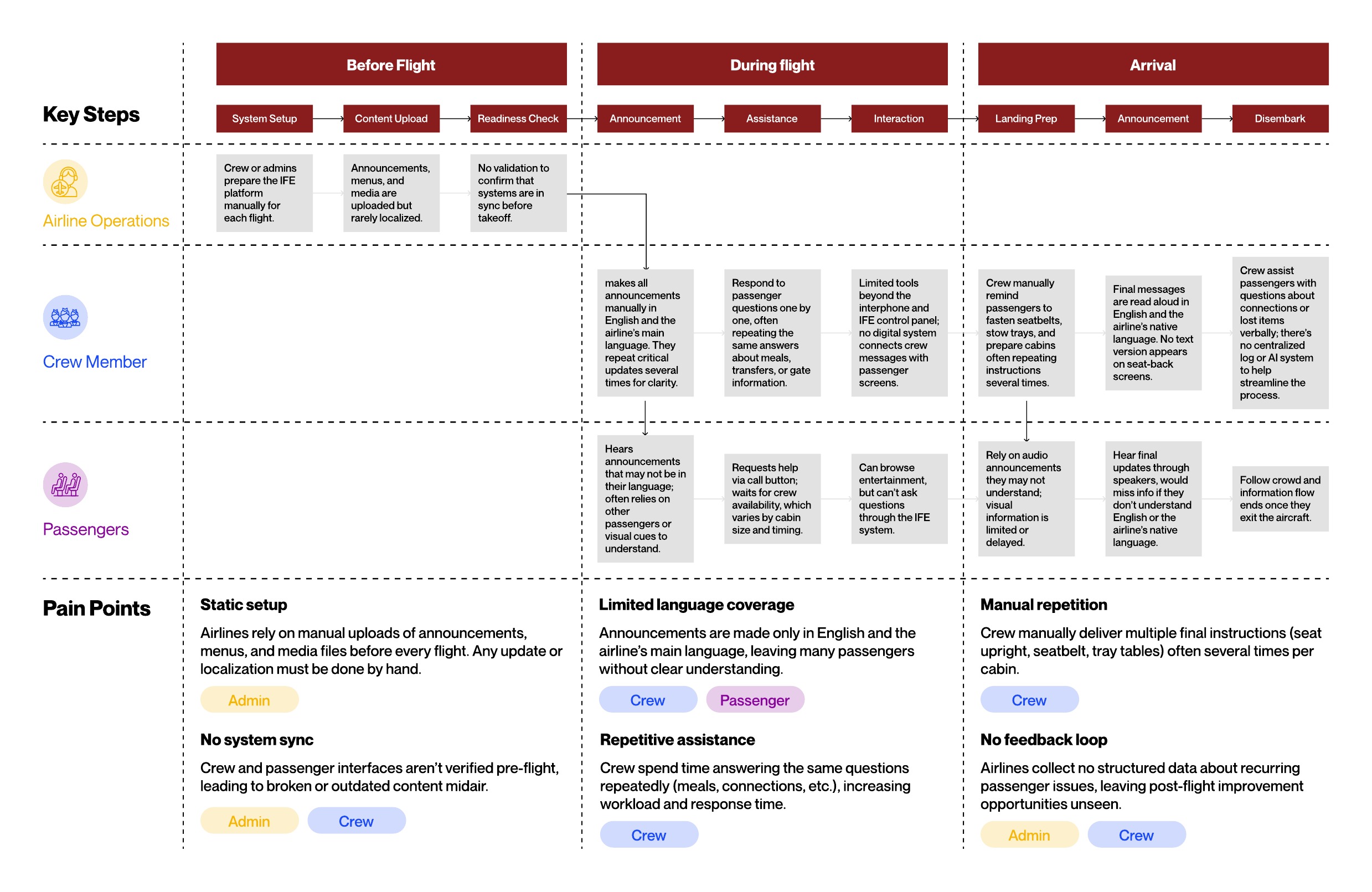
Through auditing existing IFE platforms and interviewing frequent flyers, we found that most communication still relies on manual effort, limited translation options, and inconsistent behaviour across devices—creating unnecessary friction for passengers and crew alike.
Major issues
Repetitive crew workload
Crew spend significant time repeating the same announcements and answering common questions, which leads to inconsistent communication and cognitive fatigue during long flights.
Language and accessibility gaps
Passengers speaking different languages—or those with hearing difficulties—often miss important information. Existing systems offer no adaptive translation or text-based accessibility features.
Disconnected platforms
Communication tools onboard evolved separately, not systematically. Without a shared ecosystem, interactions feel isolated for both passengers and crew.
Current-state journey map
Where communication breaks across the flight.
03 / Process
Understanding the needs of different user types.
ArMax was designed for two main users—cabin crew and passengers—each experiencing communication differently. Crew need faster, clearer ways to make announcements. Passengers need information they can understand instantly, regardless of language or hearing ability.
Three decisive artefacts
Understand. Map. Test.
01 / 03
-
01 / Understand
One system. Two very different needs.
I framed the experience from both sides of the cabin before mapping the interface: the person delivering the message and the person trying to understand it.
Lina

Cabin crew member
“I want to communicate clearly and efficiently with every passenger.”
She needs one clear way to deliver announcements without repeating them or walking the aisle to confirm understanding.
Dan

Passenger
“I just want to understand what’s being said in my own language.”
He needs translated, text-based updates that stay immediate, legible, and in context despite language or hearing barriers.
-
02 / Define
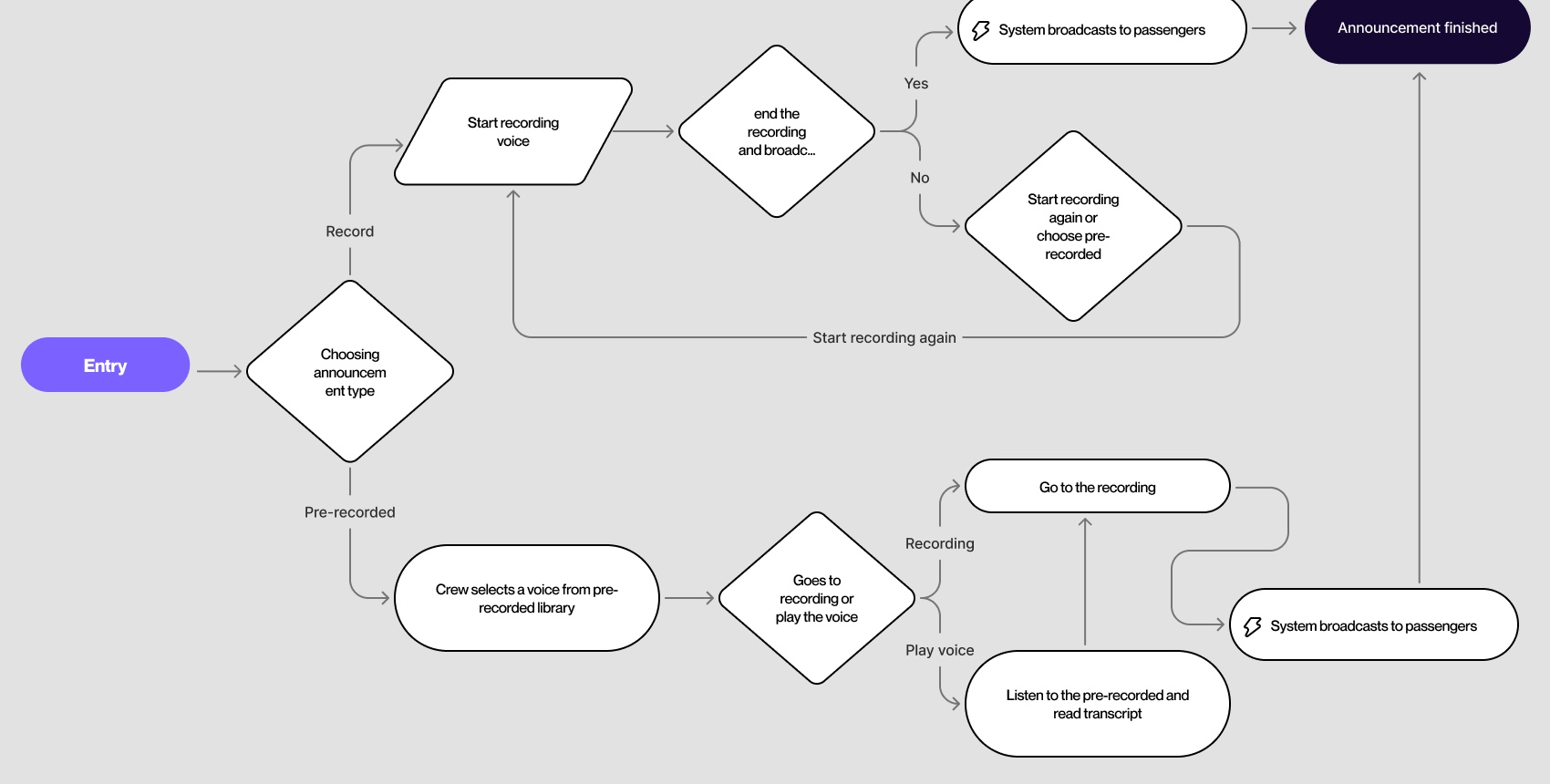
One announcement path, with two clear entry points.
I mapped the crew’s decision path from choosing live or pre-recorded audio through review and broadcast. This made confirmation moments and recovery paths visible before we committed to interface details.
- Live or pre-recorded
- Preview before broadcast
- Readable transcript
Crew announcement flowLive / Pre-recorded -
03 / Validate
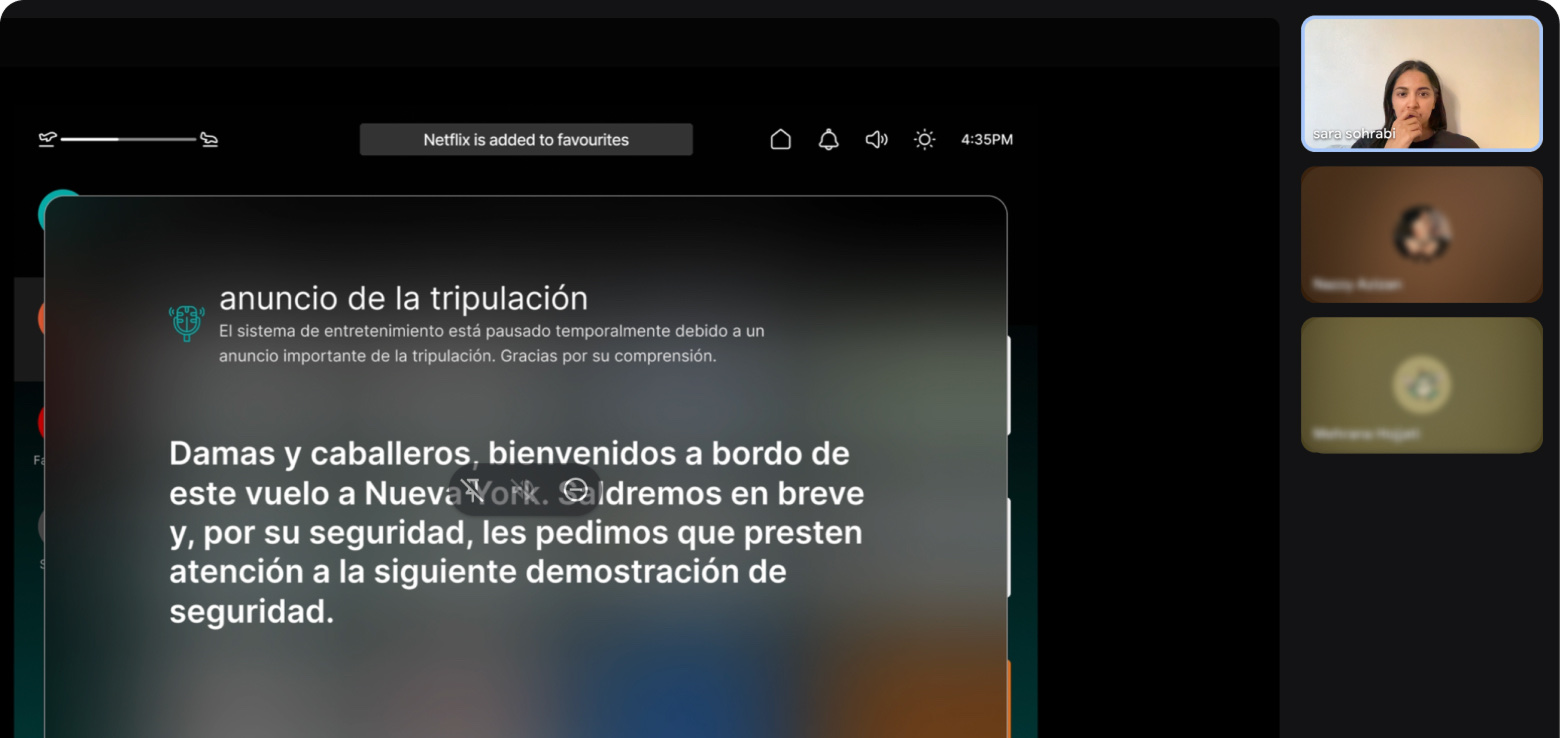
Test the translated message in context.
A remote prototype review helped us inspect the moment an announcement interrupts the entertainment experience—how quickly it is understood, how comfortably it can be read, and whether the passenger still feels in control.
- Readable while media is paused
- Translation stays in context
- Language remains adjustable
Remote prototype review
04 / Final design
One communication loop, designed for both sides of the cabin.
01 / Crew
As a crew member, I want to make announcements that reach every passenger in their own language, and sometimes use pre-recorded messages so I don’t have to repeat the same instructions throughout the flight—so communication stays clear, consistent, and effortless for everyone on board.
Crew announcement panel
Instead of repeating the same safety or service messages, crew can now deliver live or pre-recorded announcements in a few taps, saving time and maintaining clarity across the cabin.
These frames capture the refined prototype, including a transcript view under pre-recorded announcements to support readability and in-flight accuracy.
Crew panel / Key screens
From flight overview to broadcast.
01 / 06
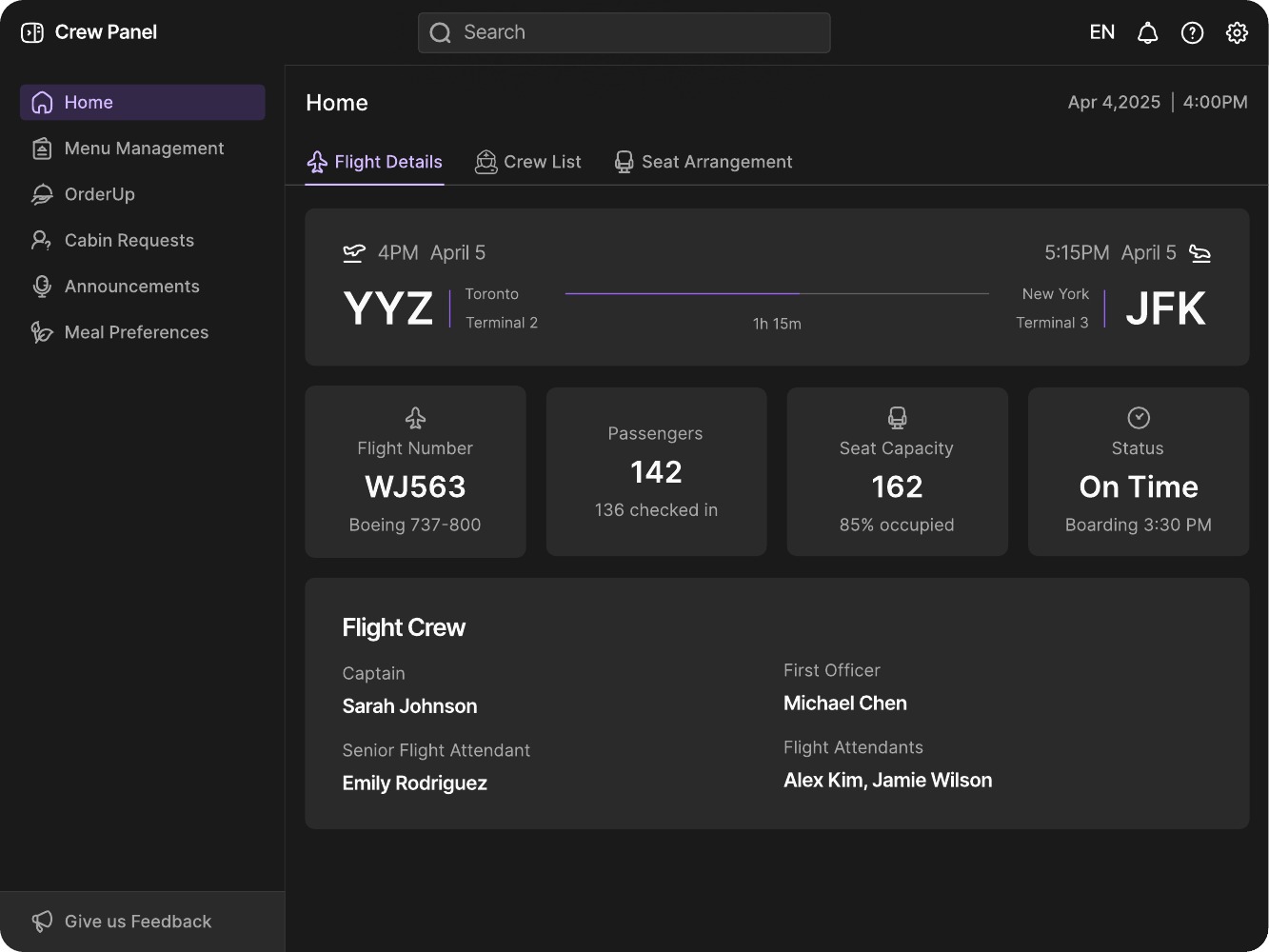
01 / OverviewFlight status at a glance 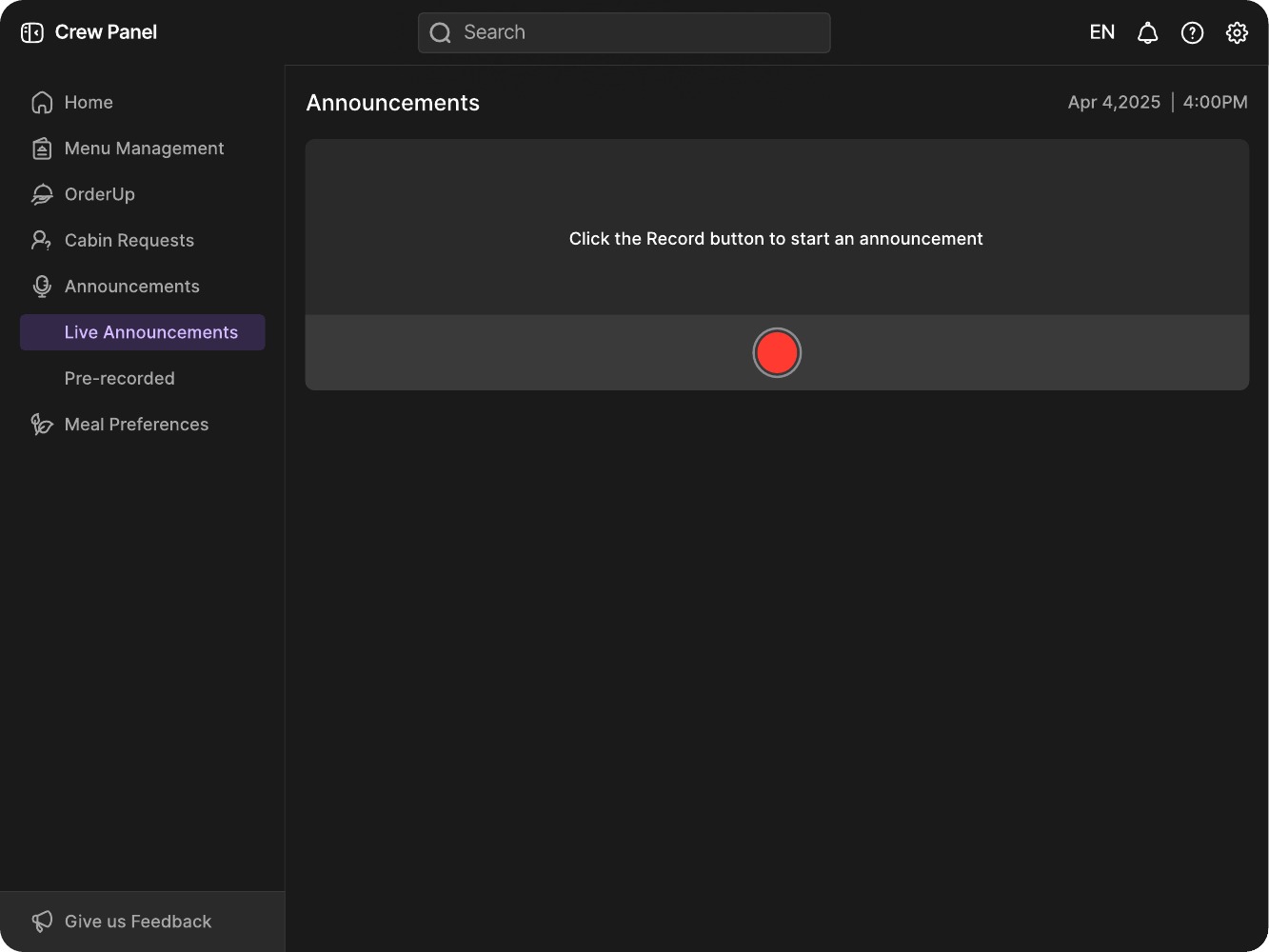
02 / LiveStart an announcement 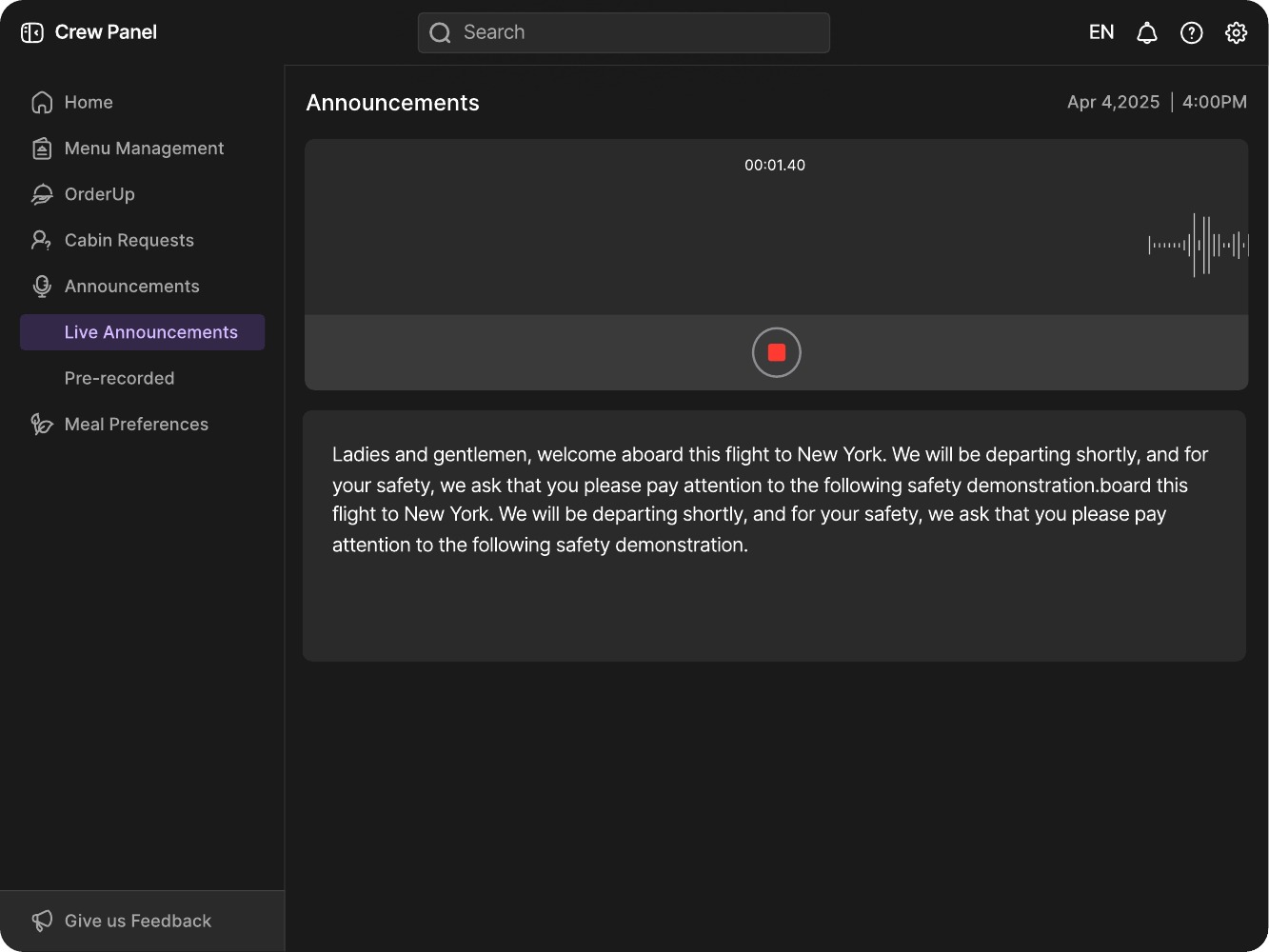
03 / TranscriptRecord and verify in real time 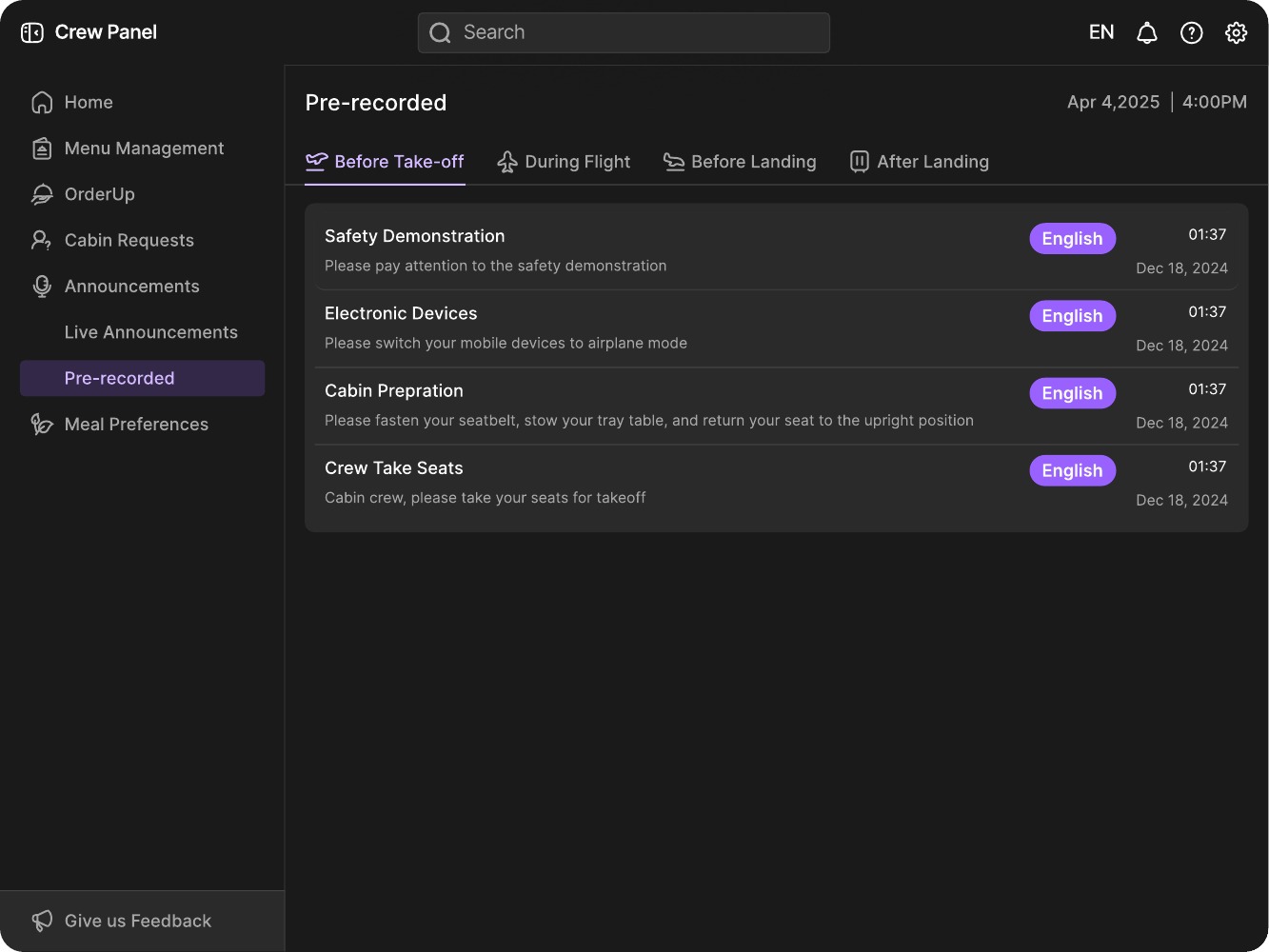
04 / LibraryBrowse by flight phase 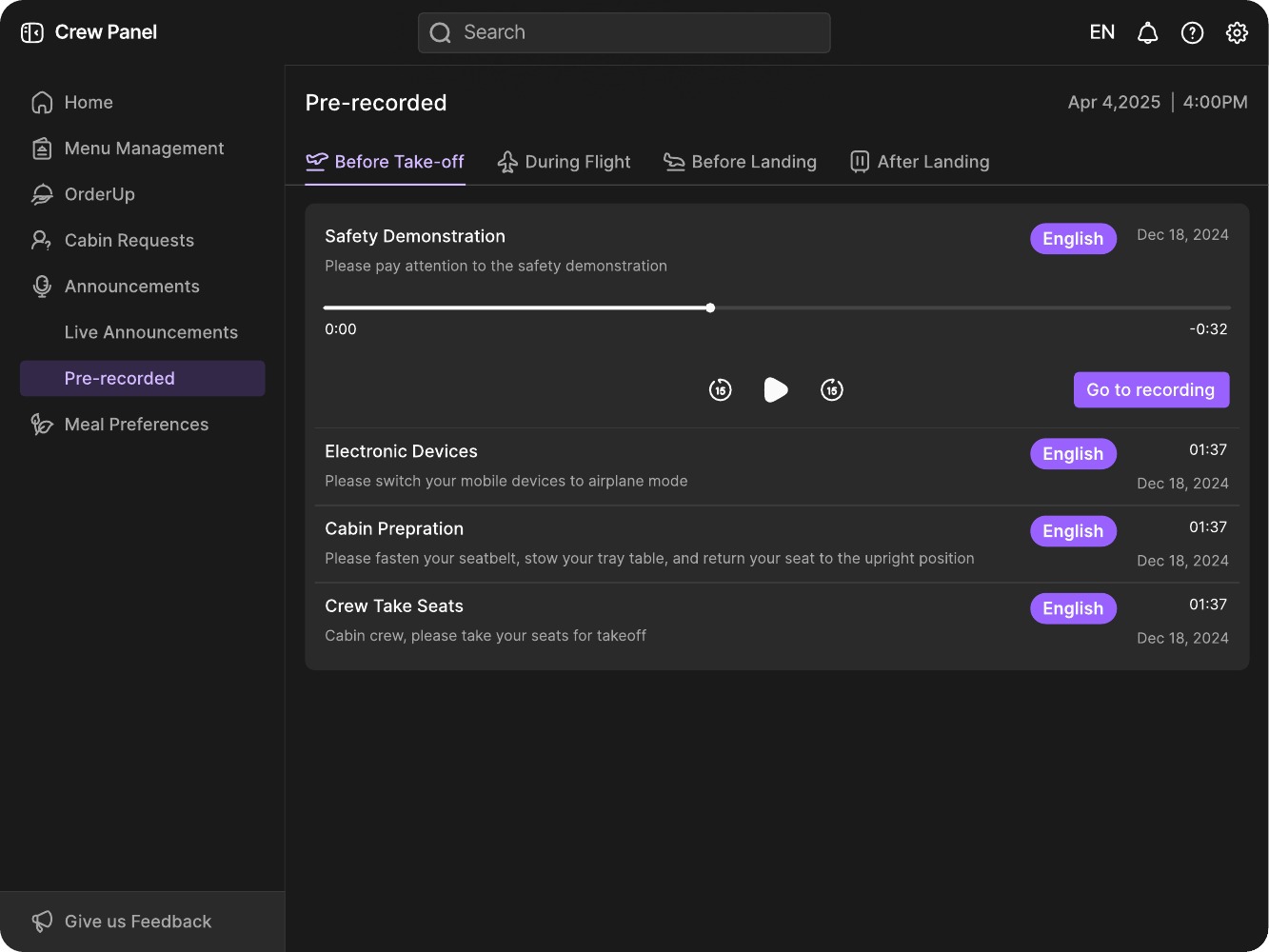
05 / PreviewListen before broadcasting 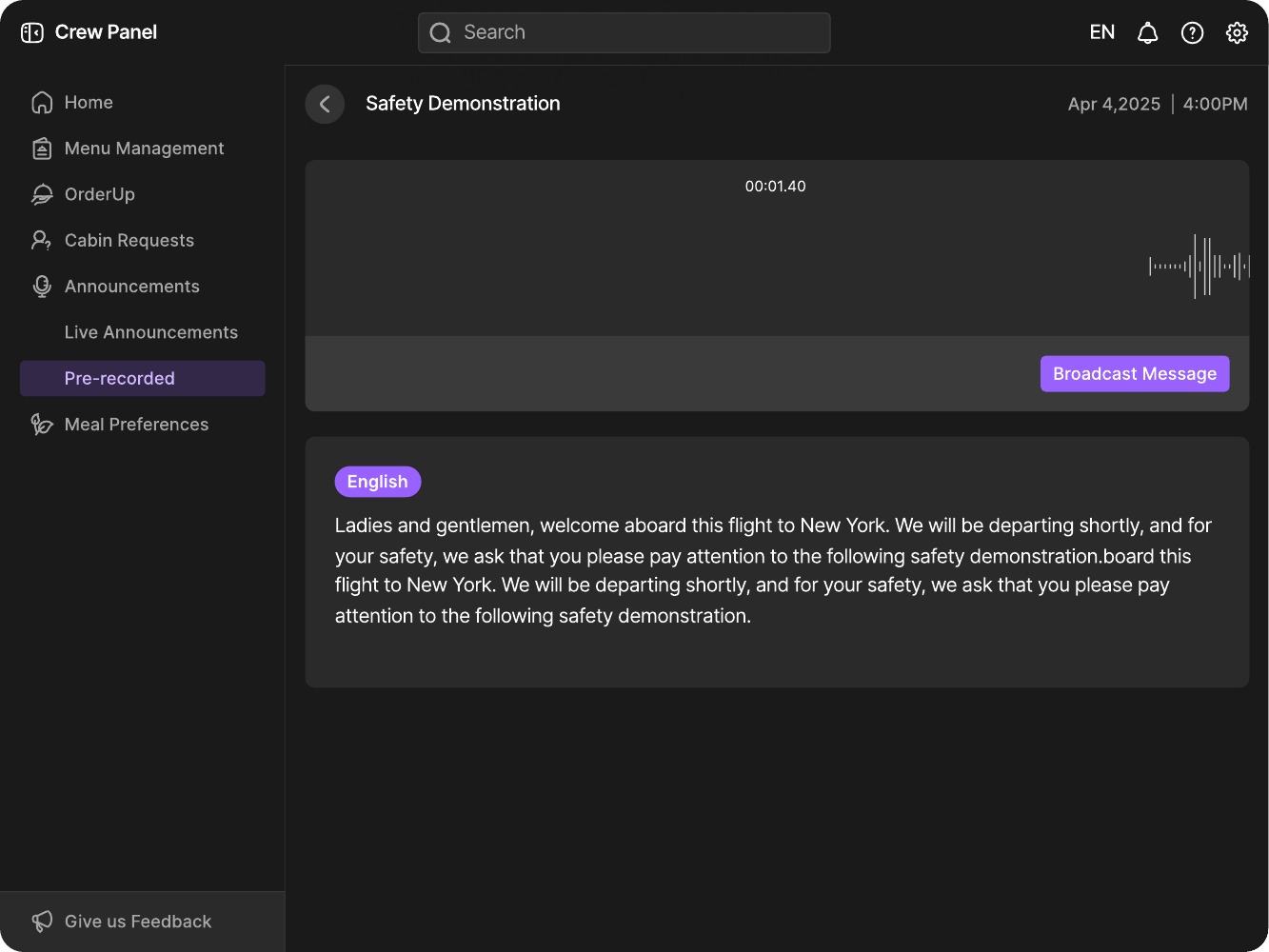
06 / BroadcastConfirm the message and send
02 / Passenger
As a passenger, I want every announcement available as readable text, so all travellers—regardless of age, language, or hearing ability—get the same information.
Passenger announcement view
Passengers can read announcements in their chosen language, selected during onboarding or adjusted anytime in Settings. This ensures that everyone receives clear, accessible updates throughout the flight.
The updated prototype includes visual and functional refinements, plus the onboarding flow and language selection process that connect the full passenger experience.
Passenger IFE / Key screens
A translated journey from onboarding to arrival.
01 / 07
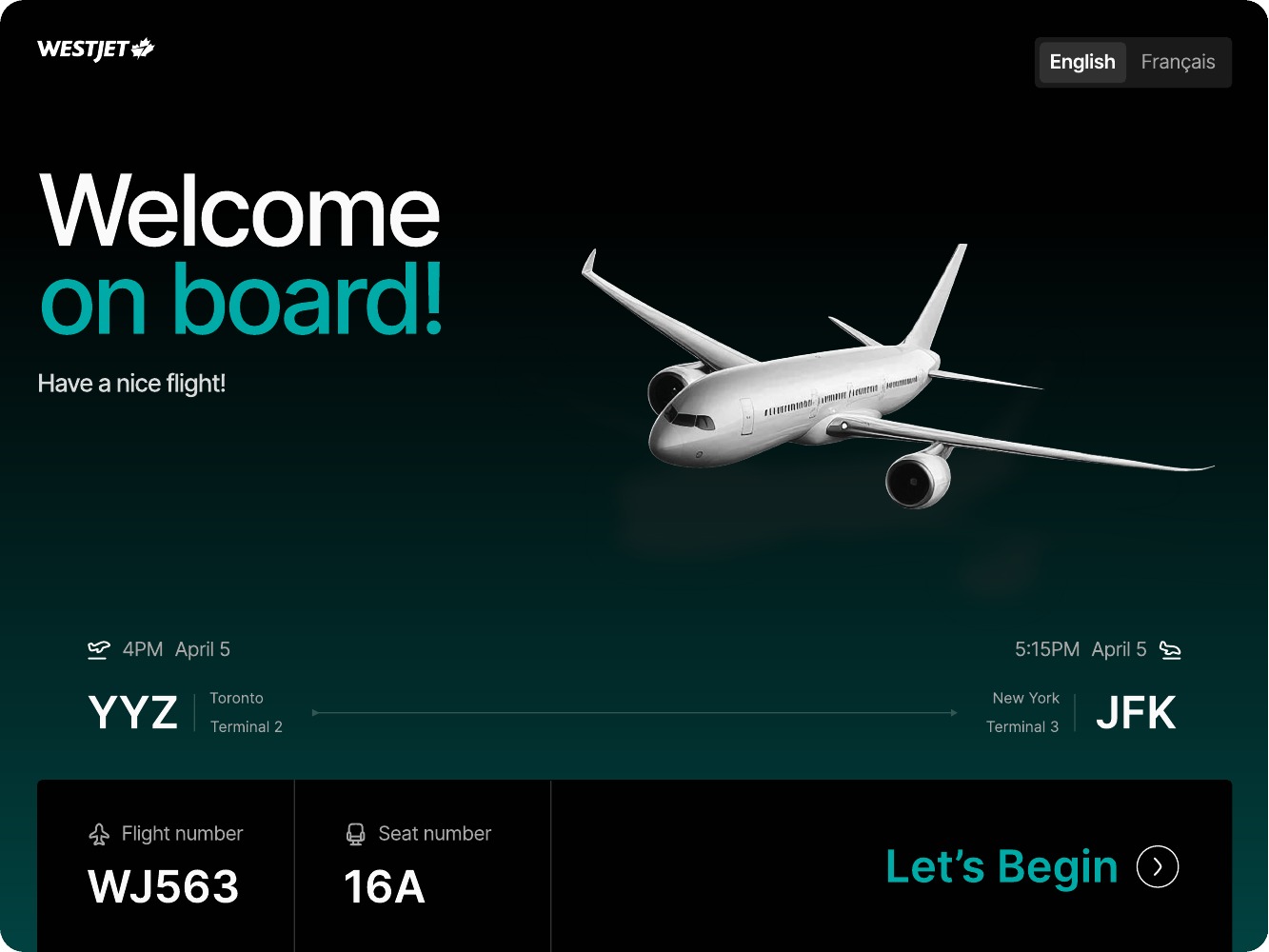
01 / WelcomeStart with flight context 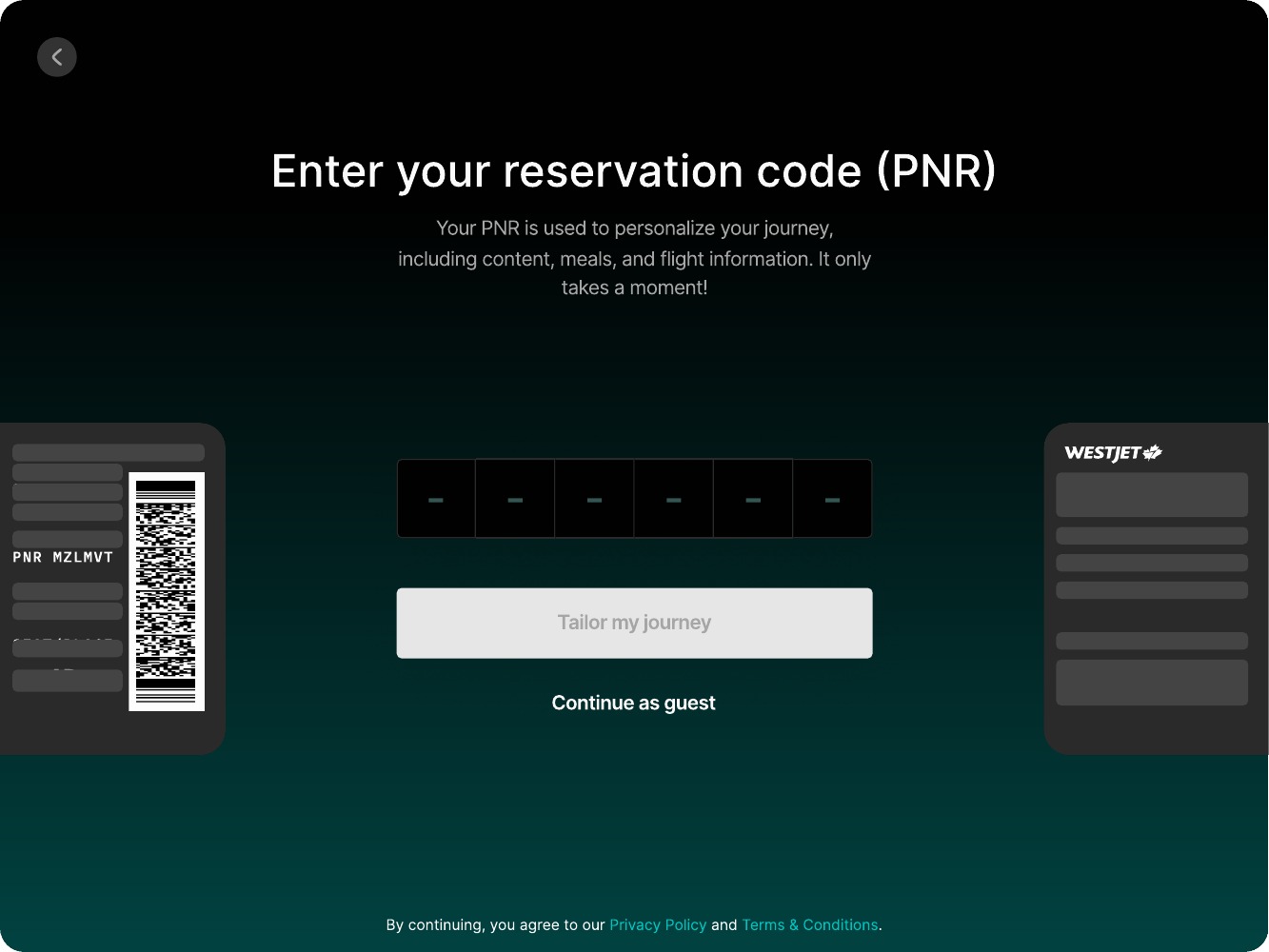
02 / PersonalizeConnect the reservation 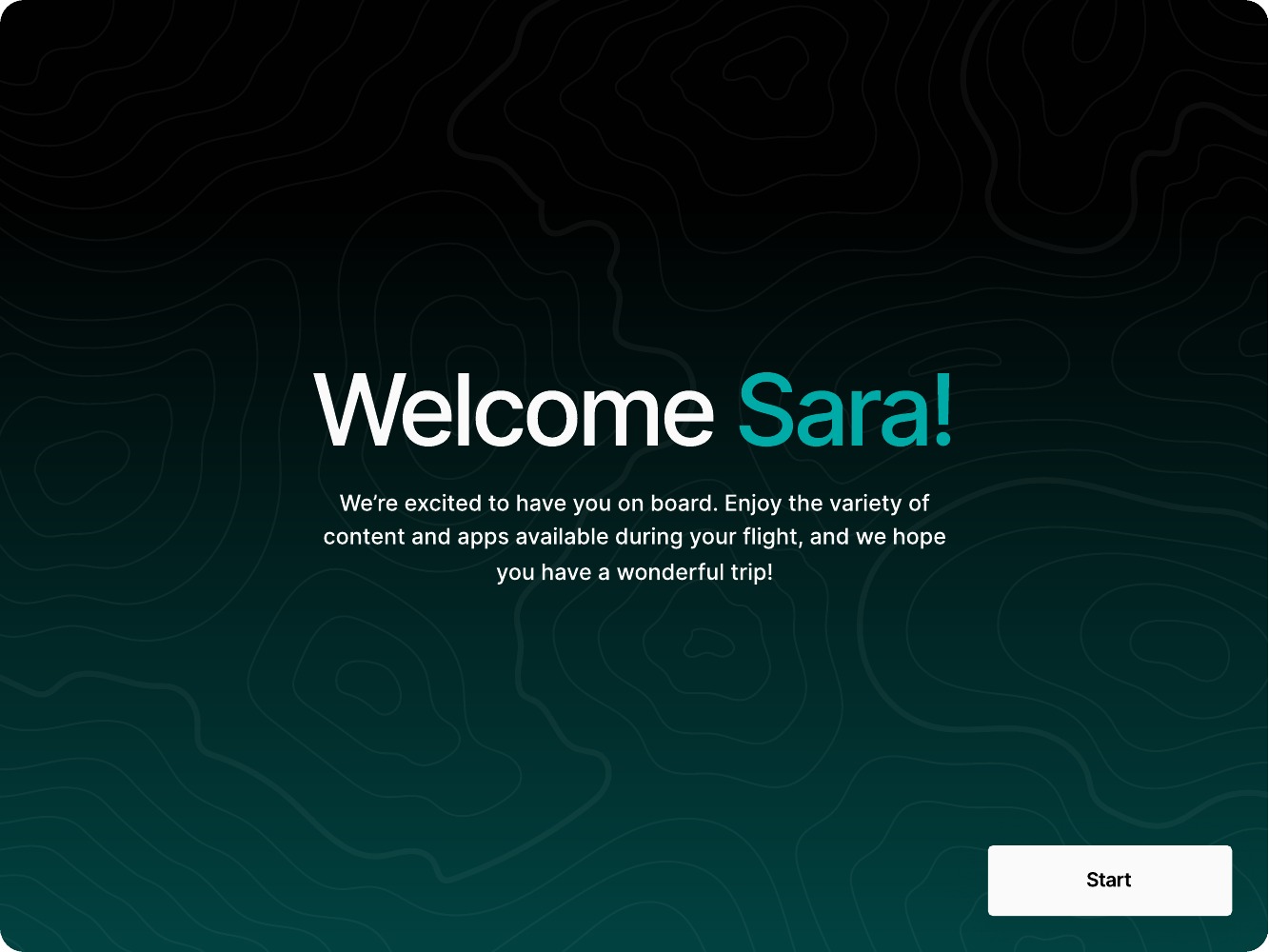
03 / OnboardingWelcome the passenger 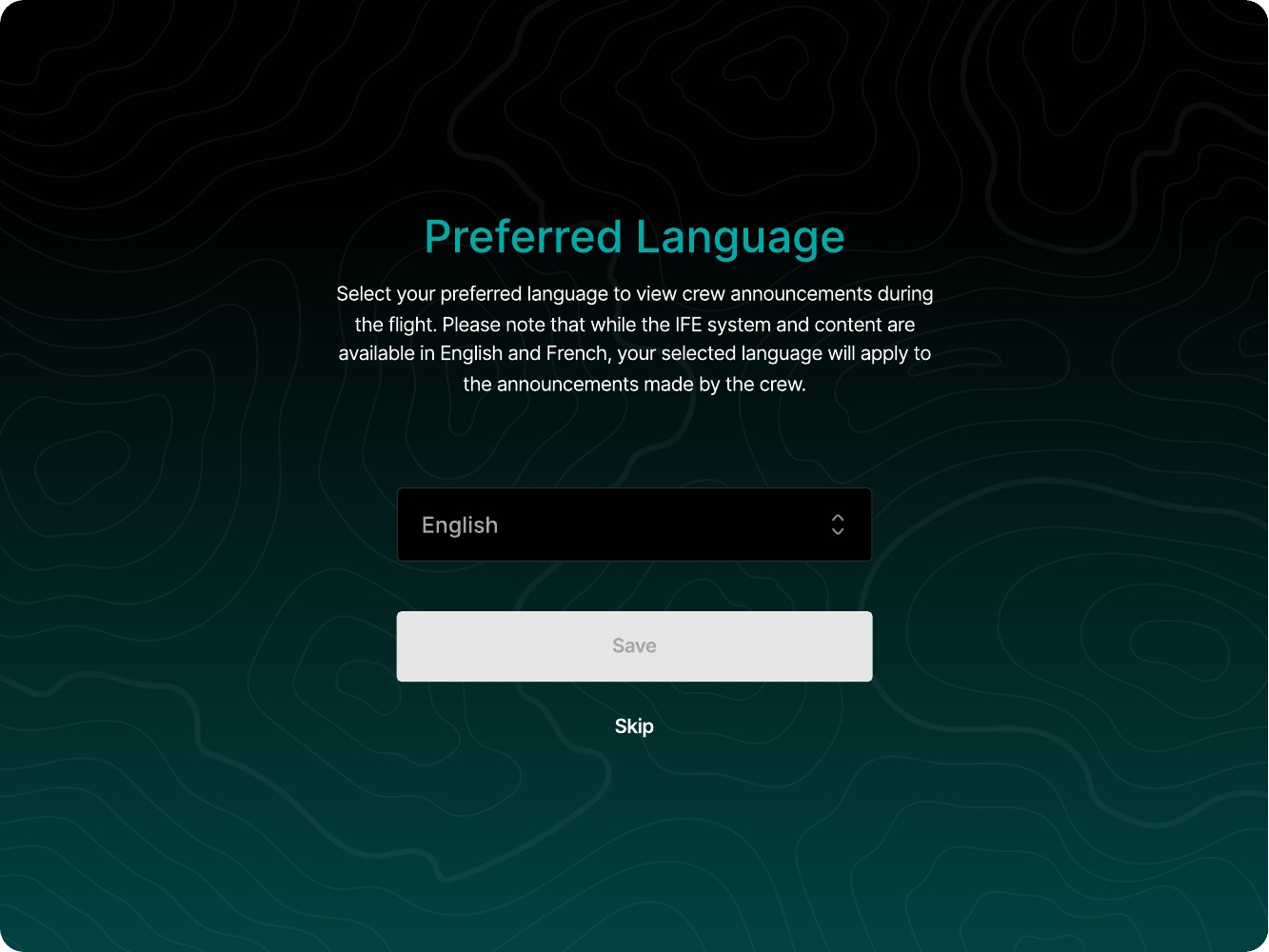
04 / LanguageChoose once during onboarding 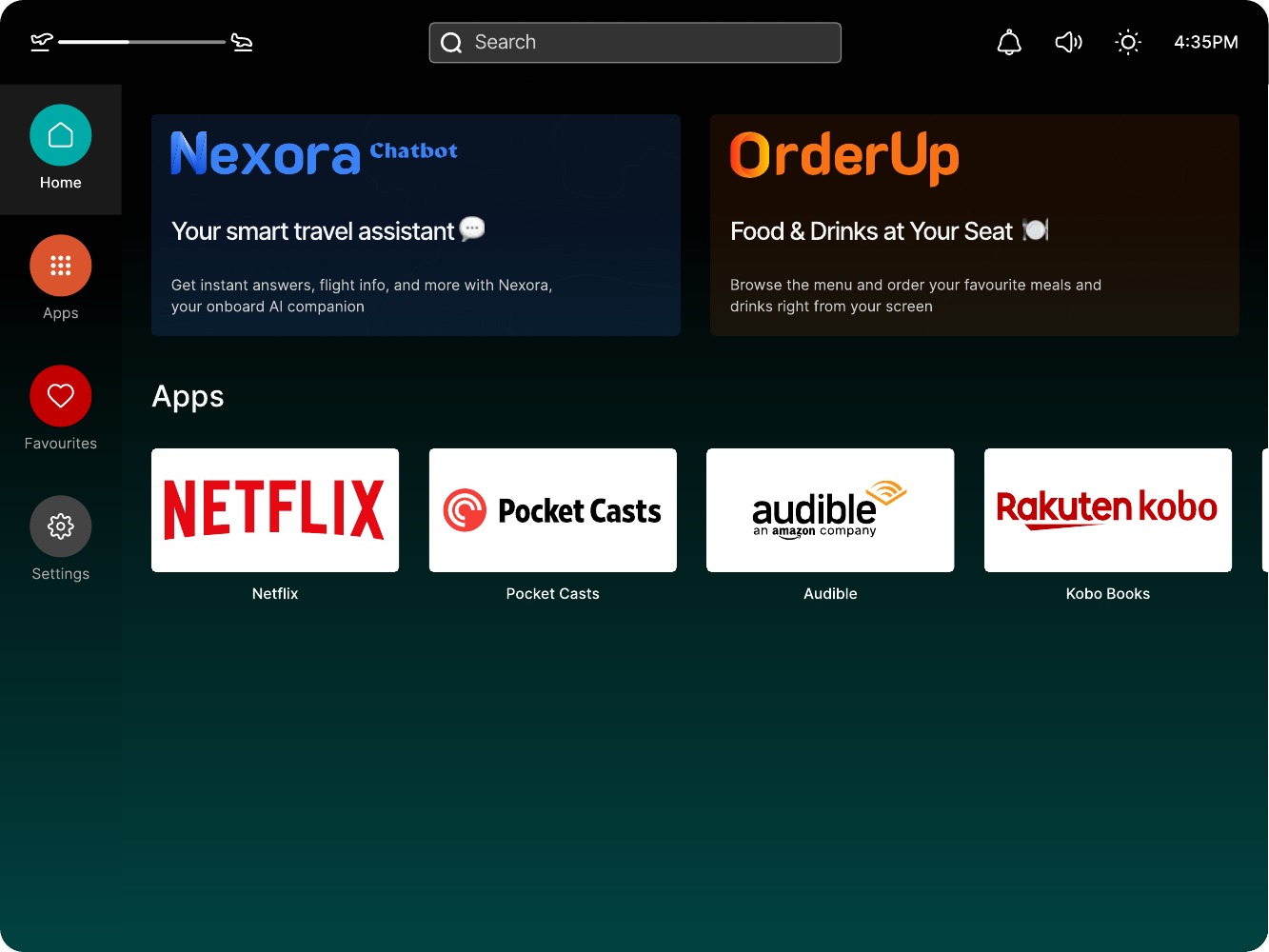
05 / HomeEntertainment and assistance together 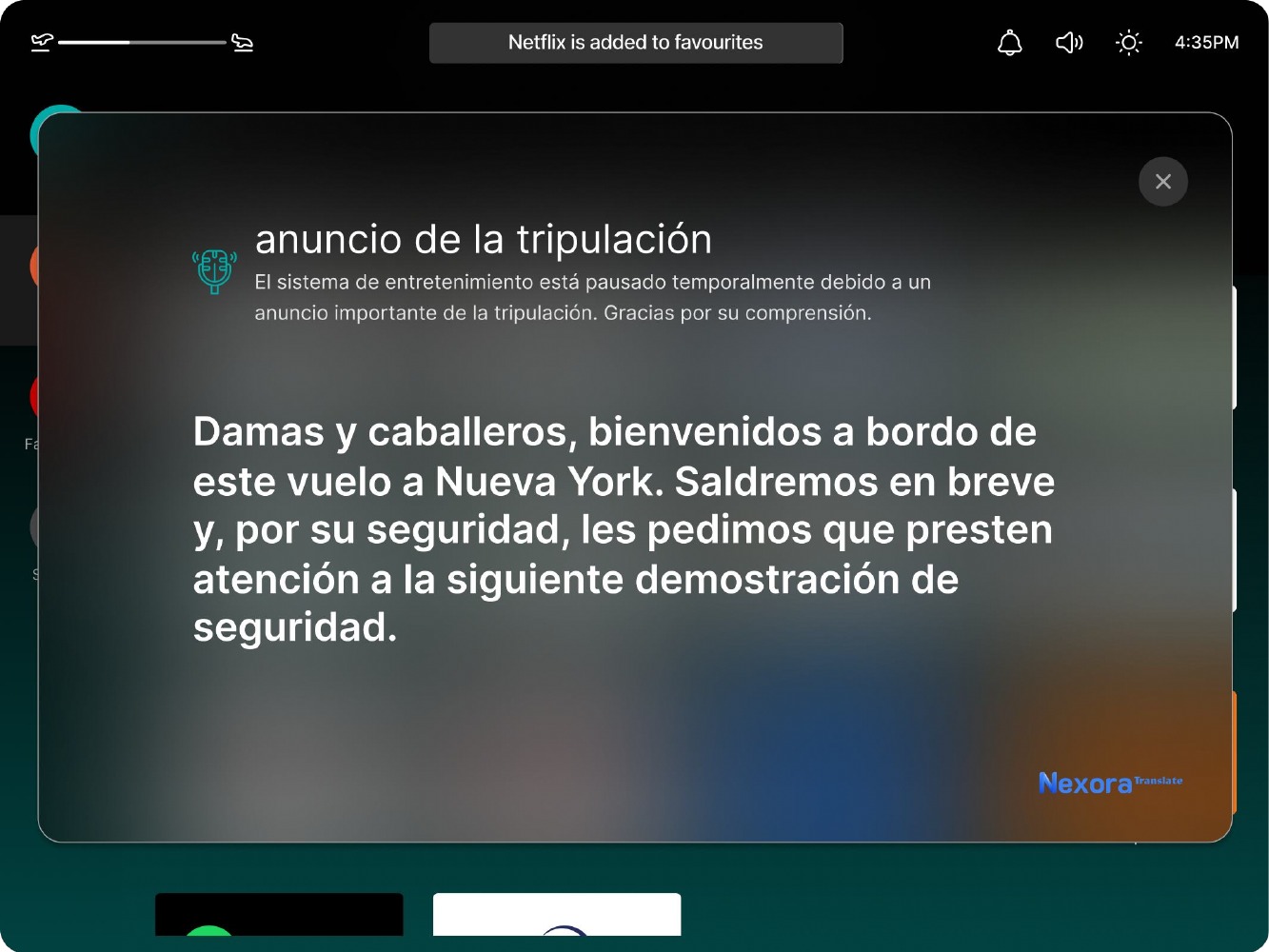
06 / AnnouncementRead the message in your language 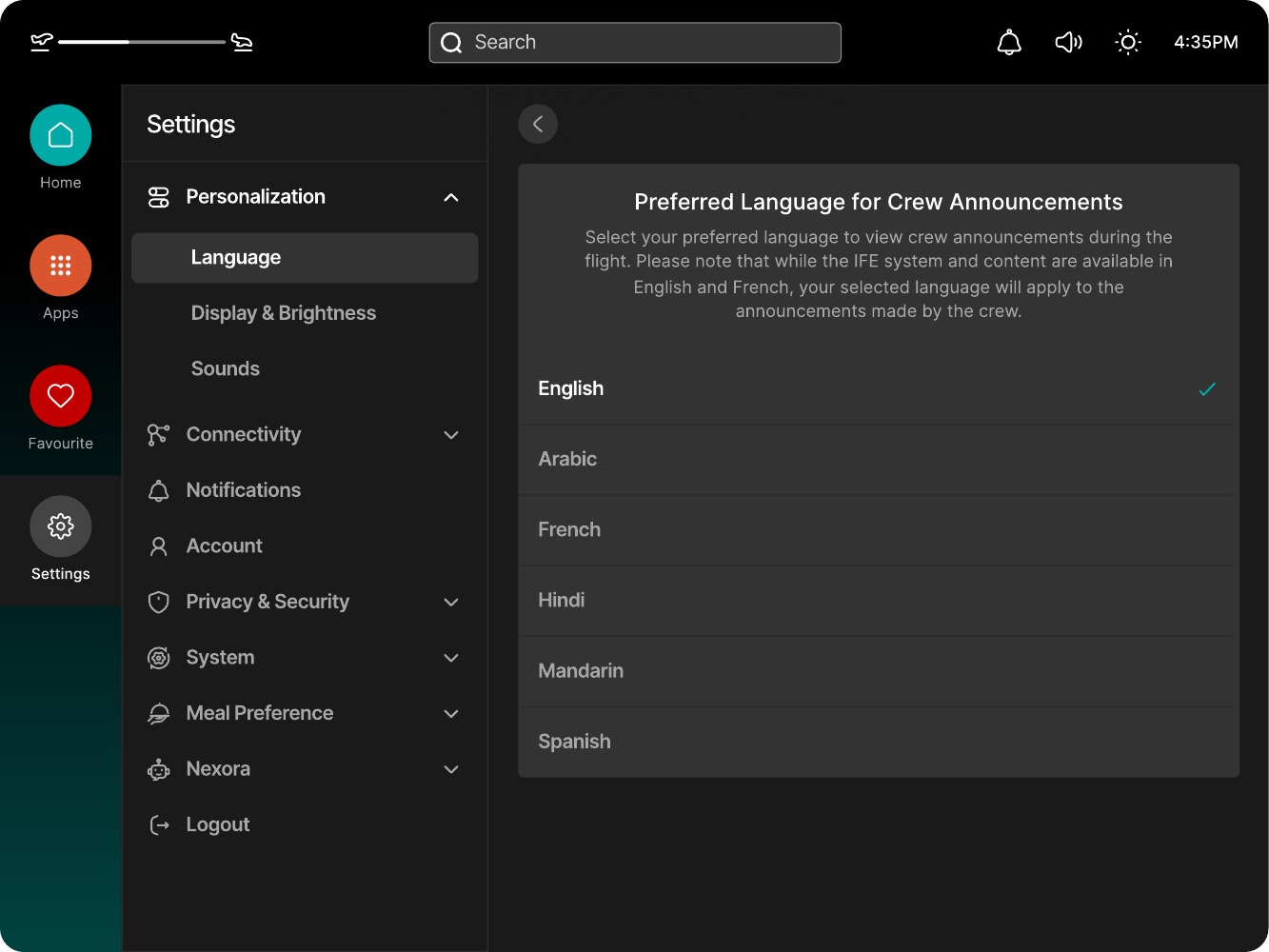
07 / SettingsChange language at any time
05 / Impact
A clearer system for passengers, crew, and operations.
Expected outcomes and insights based on prototype testing and design evaluation:
01
Reduced repetition for crew
Crew feedback indicated that pre-recorded and translated announcements could significantly cut repetitive tasks and ensure message consistency across the cabin.
02
Greater accessibility and inclusivity
By combining audio, text, and translation options, the experience becomes clearer and more inclusive for passengers of different languages, ages, and hearing abilities.
03
Clearer operational flow
Early evaluations suggested that the system helps synchronize the communication loop between crew and passengers, reducing friction in real-time updates.
Next project
02 / 08Product design · 2023—2024
Evolo AI
View in selected work